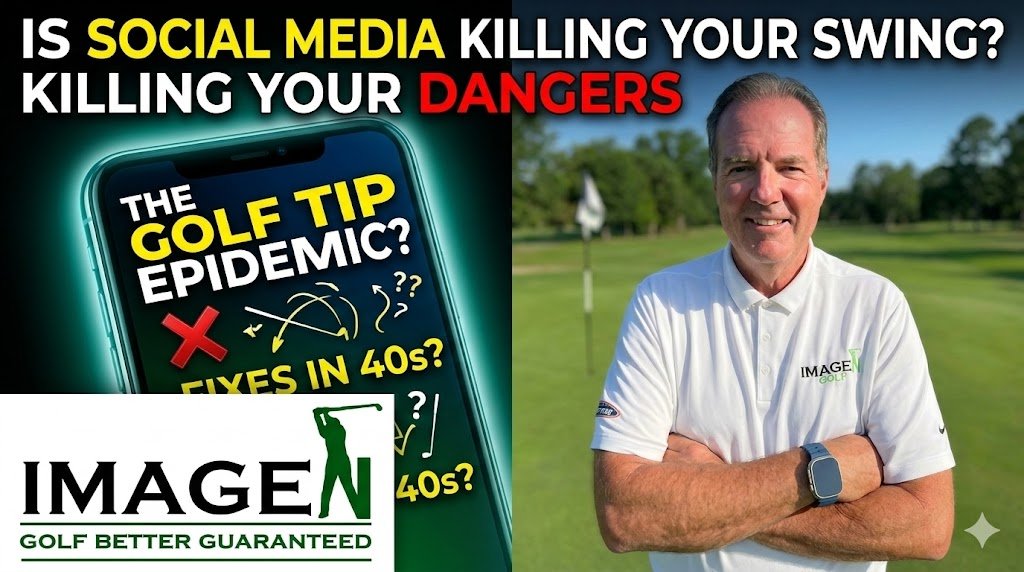
I’m Daniel Guest, and in my lesson studio at Imagen Golf, I see a lot of frustrated players. I’ve been fortunate enough to teach everyone from professional world long drivers to elite collegiate athletes, but I spend the bulk of my time with recreational golfers. And lately, almost every time a new amateur walks through my doors, I hear the exact same confession:
"Daniel, I don’t know what I’m doing anymore. I’ve watched so much golf content online, I’m completely lost."
I want to validate exactly how you're feeling right now: It is not your fault. You love this game. There is nothing quite like the feeling of absolutely flushing an iron or carding a personal best, and your desire to chase that feeling is what makes golf so great. But right now, we are facing an absolute epidemic of information overload, and it is quietly destroying your swing.
Here is the candid truth about navigating golf instruction in the smartphone era—and how we can get you back to playing the best golf of your life.
The 60-Second Trap
We all do it. You’re sitting on the couch at 10 PM, scrolling through your phone, and the algorithm serves up a beautifully polished, 40-second video promising a "secret" to a square clubface or a guaranteed fix for your slice. It’s catnip for the golfing soul. It’s free, it’s digestible, and it gives you a hit of hope for your Saturday morning tee time.
But accessibility does not equal quality. The internet is flooded with self-appointed experts whose primary skill is beating the algorithm, not lowering your handicap. We have traded proper diagnosis for quick-fix entertainment.
Chasing Symptoms Instead of Causes
The biggest danger of social media instruction is a complete lack of personalization. Without understanding the root cause of your swing flaw, applying a random tip is like playing Russian roulette with your scorecard.
Let's look at the classic "over-the-top" swing, the most common ailment among amateur golfers.
If you search for a fix online, you will find hundreds of videos telling you to "drop your hands" or "swing from the inside." But what if your over-the-top move is actually a subconscious reaction to an open clubface caused by a terrible grip?
If your grip is weak and your face is wide open, and you start trying to swing "inside-out" based on a TikTok tip, you are going to hit the ball worse than ever. You didn't need a path fix; you needed a grip fix. If you fix the clubface, the path often corrects itself.
My friend and fellow Top 100 Teacher Tony Ruggiero compares it to walking into a Walgreens. Every single medicine in that store is designed to help someone. But if you take one pill from every single aisle, you’re going to end up in the hospital. That is exactly what you are doing to your golf swing when you piece together random tips from ten different instructors.
Popularity vs. Pedigree
The digital age rewards engagement, but algorithms do not verify expertise. Just because a video has two million views does not mean the person swinging the club has ever helped a real human being break 90.
Before you take your next piece of advice online, run it through this simple vetting process:
Does this coach have a track record? Have they developed real players and sustained improvements over time?
Are they diagnosing or just prescribing? Do they explain who the tip is for, or do they claim it’s a universal "fix-all"?
Is it instruction or bravado? Look for substance over staged, highly edited highlight reels.
Stop Scrolling, Start Practicing
Don't get me wrong: the internet is a tremendous resource. You have unprecedented access to major champions and brilliant minds. But instruction is not a Spotify playlist. You cannot put your golf swing on shuffle and expect to find consistency.
To the average golfer who is feeling lost in the weeds right now: Take a deep breath. You have the athletic ability to play great golf. Progress in this game is built on commitment, not on collecting fifty different swing thoughts. It’s time to find one trusted voice, stick to a diagnosed plan tailored to your unique mechanics, and put the phone down so you can actually get to work.